Soho
Of Human BondageSoho is the London setting in which Philip Carey finds Cronshaw living amid poverty and isolation, and later discovers him collapsed in his lodging. The district’s shabby eating-house and deteriorating rooms make Cronshaw’s self-chosen solitude inseparable from illness and material hardship; for Philip, these visits bring the remembered world of Paris into contact with his emerging life in medicine.
Setting and Social Conditions
Cronshaw invites Philip to meet him at the Au Bon Plaisir, a poor restaurant in Dean Street where he eats between seven and eight. He does not invite Philip to his lodging, explaining that it is unsuitable for the reception of an eminent member of the medical profession. The restaurant’s condition suits his isolation: Cronshaw says that he eats there because he can be alone, and that its failing business and execrable food are to his advantage because few customers come.
The address Philip later visits is in Hyde Street, among dingy houses, broken windows crudely repaired with strips of French newspaper, unpainted doors, and shabby ground-floor shops. Laundries, cobblers, and stationers stand among ragged children playing in the road while an old barrel-organ plays. At Cronshaw’s building, a shop selling cheap sweets occupies the ground floor. One jet of gas lights the staircase, and the house has a revolting odor. These details establish Soho not as a picturesque artistic quarter but as a place where cramped housing and visible neglect structure daily life.
Cronshaw’s Soho Life
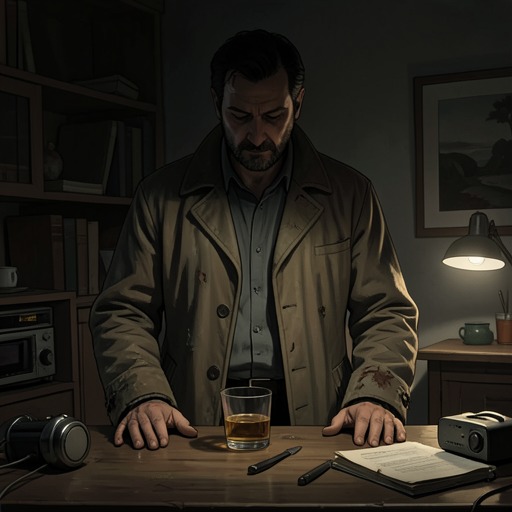
When Philip meets Cronshaw at the restaurant, nearly three years have passed since they last saw one another. Cronshaw sits away from drafts in the shabby great-coat Philip remembers, with his old bowler hat still on. He has changed sharply: formerly corpulent, he is now dried-up and yellow-looking, with loose, wrinkled skin at his neck; his clothes hang loosely, his collar is several sizes too large, and his hands tremble continually. His scrawled handwriting had already suggested his decline, and the meeting confirms that he is evidently very ill.
His habits reveal both his straitened circumstances and his effort to preserve the routines of an independent life. He drinks absinthe and says he eats little, suffering in the morning; his dinner is soup followed by a little cheese. His chosen restaurant offers solitude, but it is also a failing establishment whose food is poor and whose remaining customers include a few sex workers and unemployed waiters. Cronshaw’s pleasure in the restaurant’s ruin is wry and practical: its decline leaves him with the privacy he wants.
Philip’s Visits and the Return of Their Friendship
Cronshaw’s letter recalls that he believes he helped rescue Philip from a period of despair, while describing himself as now hopelessly immersed in a Slough of Despond and buffeted by philistines. He welcomes Philip as someone with whom he can talk about Paris. The meeting therefore reconnects Philip with the artistic and intellectual life he left behind, even as Cronshaw’s deterioration makes that past difficult to idealize.
When Cronshaw fails to appear at the restaurant for three days, Philip goes to his address in Hyde Street. An elderly Frenchwoman tells him that an Englishman lives at the top, at the back, and advises him to go up. Philip encounters a suspicious woman on the stairs and finds three doors on the top landing. After knocking at one locked door, he tries another; it opens into darkness, and he recognizes Cronshaw’s voice. The search through the decaying building turns concern into direct contact with the precarious conditions of Cronshaw’s life.
From Lodging to Final Discovery
The Soho visits recur after Philip has taken up hospital work. About a fortnight after an earlier visit, he knocks at Cronshaw’s room after finishing his day at the hospital. Receiving no answer, he enters and finds Cronshaw huddled on one side of the bed. Philip cannot tell whether he is asleep or in one of his fits of irritability. Seeing his open mouth, Philip touches his shoulder, then gives a cry of dismay. He feels for Cronshaw’s heart and holds a looking-glass before his mouth, unsure what to do.
The scene makes Philip’s medical training newly urgent but not yet sufficient to spare him helplessness. Still wearing his hat and coat, he runs downstairs, hails a cab, and drives to Harley Street to ask Dr. Tyrell to come because he thinks Cronshaw is dead. The narrative thus returns to Cronshaw’s room as the endpoint of the earlier visits: the man who sought solitude in a failing restaurant is finally found alone in his lodging, and Philip’s relationship with him is recast as an encounter with illness, possible death, and the limits of intervention.
Narrative Significance
Soho links several strands of Philip’s life through place rather than through a single dramatic public event. Cronshaw’s restaurant is a meeting point with the Paris past, while his room in Hyde Street exposes the poverty and isolation that lie behind his talk of independence. The contrast between his preference for being alone and Philip’s repeated return gives the district its relational force: Soho is where Philip’s concern persists despite the shabby surroundings and Cronshaw’s difficult, diminished condition.
The setting also sharpens the change in Philip’s vocation. In his hospital work, he has found an absorbing interest in patients and a direct sense of contact with human beings; at Cronshaw’s bedside, that professional direction is tested by a particular friendship. The transition from Dean Street’s empty restaurant to the dark room at the top of the Hyde Street house carries the narrative from conversation about Paris to the immediate fact of bodily vulnerability.